
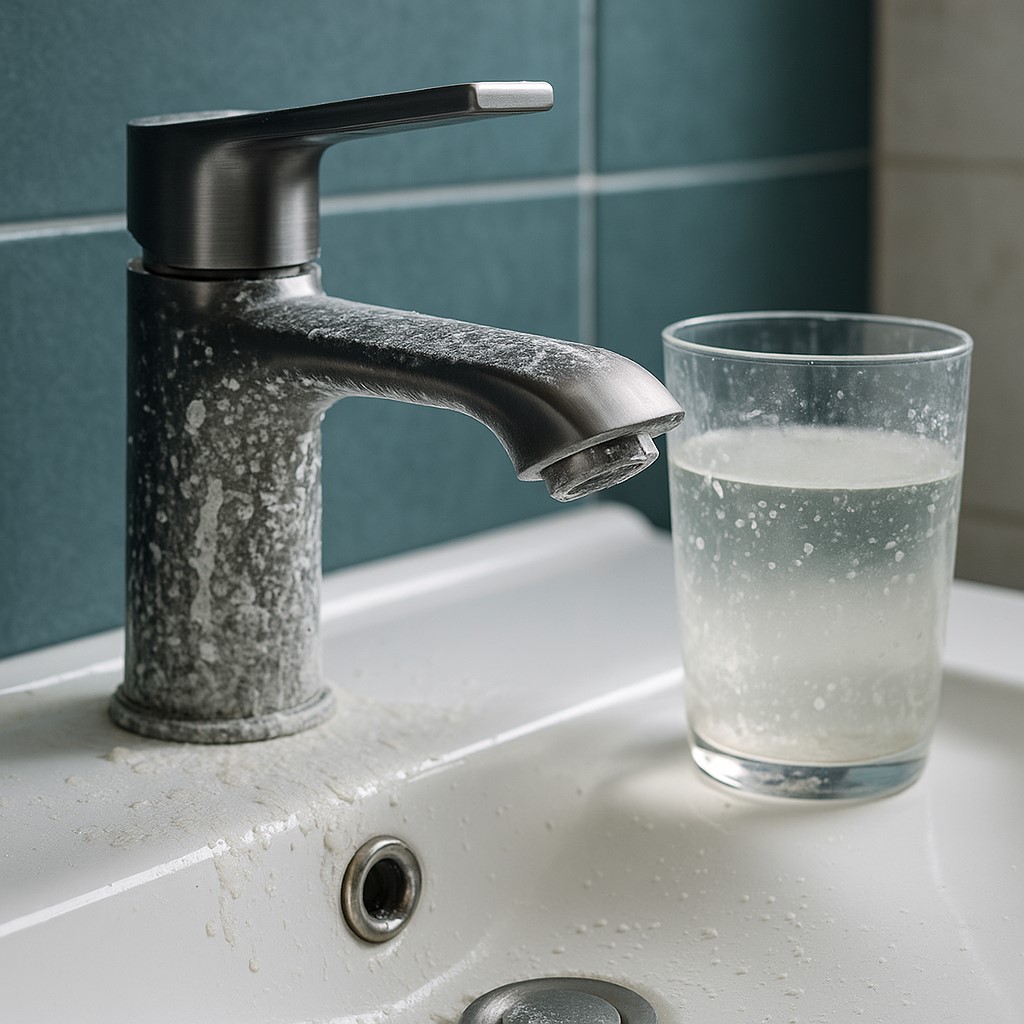
If you’ve lived in Weatherford for any length of time, you’ve probably noticed the white crusty stuff that builds up around your faucets. Or maybe your dishes come out of the dishwasher looking spotted, no matter what detergent you use. Your showerhead might drip instead of spray, and that electric kettle you bought last year already looks like it’s been through a decade of use.
Welcome to life with Texas hard water.
It’s not just annoying—it’s expensive. Those mineral deposits slowly eating away at your plumbing and appliances are costing you real money, and most people don’t realize how much damage is happening until something breaks down completely.
What’s Actually In Our Water?
Hard water isn’t dangerous to drink. Let’s get that out of the way first. The calcium and magnesium dissolved in our water supply won’t hurt you. In fact, some people argue these minerals are beneficial. But your pipes, water heater, and washing machine? They hate it.
Here in Weatherford, we’re sitting on geology that creates particularly problematic water. As groundwater moves through the limestone and chalk deposits underneath Parker County, it picks up these minerals like a sponge. The U.S. Geological Survey classifies much of our area as having “hard” or “very hard” water, often measuring over 180 milligrams per liter of dissolved minerals.
What does that mean in practical terms? It means every time water runs through your home, it’s leaving behind tiny amounts of mineral deposits. Day after day, month after month, those deposits build up into something called limescale—that chalky white substance you see everywhere water touches.
Your Appliances Are Suffering (And So Is Your Wallet)
Let’s talk about what’s happening to your dishwasher. Right now, limescale is probably coating the heating element inside it. The spray arms that spin around to clean your dishes? Scale is narrowing those tiny holes, reducing water pressure. The result is dishes that don’t get clean, spots on your glasses, and a machine that’s working way harder than it should.
Your washing machine is dealing with the same problem. Mineral deposits coat the drum and heating elements. You’ve probably noticed that your clothes don’t feel as soft as they should, even with fabric softener. That’s because hard water interferes with how detergent works. You’re using more soap, more softener, and getting worse results. Meanwhile, the machine itself is straining against all that buildup.
The Water Quality Research Foundation did a study that should worry any homeowner in Weatherford: appliances running on hard water can use up to 30% more energy because of scale buildup. That’s 30% more electricity just to do the same job, all because minerals are insulating heating elements and making everything work harder. Your utility bills are higher every single month, and you probably don’t even realize why.
And here’s the real kicker—all that extra strain shortens the lifespan of these appliances significantly. That dishwasher that should last you 10-12 years? With untreated hard water, you might be replacing it in 7 or 8. Same with your washing machine. When you factor in replacement costs of $500 to $1,500 per appliance, we’re talking about thousands of dollars lost over the years.
The Slow Death of Your Plumbing
Walk into your bathroom and take a good look at your showerhead. See those clogged nozzles? That’s not dirt—it’s mineral buildup. Over time, more and more of those little holes get blocked, which is why your shower pressure isn’t what it used to be. Eventually, you’ll need to replace the entire showerhead because no amount of scrubbing will clear out the scale that’s formed inside.
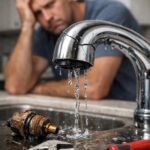
Your faucets are going through the same thing. The aerators—those little screens at the end of your faucets—get caked with limescale. Water flow becomes restricted and uneven. You might even hear a whistling sound as water tries to force its way through narrowed openings.
But the cosmetic issues are just the beginning. Inside your walls, hard water is quietly corroding your pipes. This is especially true in older Weatherford homes where the plumbing system has already been in place for decades. The constant exposure to minerals can lead to pinhole leaks, weakened joints, and eventually, pipe failures that require expensive repairs or full replacements.
Plumbers around town will tell you the same thing: homes with untreated hard water need plumbing work way more often than homes with water softeners. We’re talking about repair bills that can easily run into thousands of dollars when pipes start failing behind your walls or under your foundation. So, what do you need? A whole home water filtration system.
Your Water Heater is Burning Money
Of everything in your home, your water heater takes the worst beating from hard water. Think about it—this is where water sits and gets heated to high temperatures day in and day out. Those conditions are perfect for limescale formation.
The scale accumulates on the heating elements and along the inside of the tank. As it builds up, it creates an insulating barrier between the heating element and the water. Your water heater now has to work much harder and much longer to heat the same amount of water. According to the Department of Energy, scale buildup can slash a water heater’s efficiency by up to 50%.
So What Can You Actually Do About It?
The good news is you’re not helpless. There are real solutions that work, and while some require an upfront investment, they pay for themselves over time through lower bills and fewer repairs.
Water Softeners: The Real Deal
A water softener is the most effective way to deal with hard water, period. These systems remove the calcium and magnesium from your water before it ever reaches your pipes, appliances, or fixtures. The process is called ion exchange—the softener swaps out those hard minerals for sodium or potassium ions that don’t cause buildup.
The most common type is the salt-based water softener. Yes, you have to add salt periodically (usually every few weeks), but it’s a small hassle for what you get in return. Companies like Culligan and Kinetico make solid systems that’ll run you between $1,000 and $3,000 installed. That might sound steep, but consider what you’re protecting: your entire home’s plumbing system, every appliance that uses water, and your water heater.
Salt-free water conditioners are another option. These don’t actually remove the minerals—instead, they change the mineral structure so scale doesn’t form as readily. They’re lower maintenance because you don’t need to buy and add salt. The downside? They’re not as effective, especially with water as hard as ours. If you’ve got moderately hard water, they might work fine. But in Weatherford, where our water is genuinely problematic, you probably want the real thing.
Then there are magnetic and electronic descalers. These are the budget option at $200 to $500, and they claim to prevent scale using magnetic or electrical fields. I’ll be honest—the jury’s still out on these. Some people swear by them, others say they’re a waste of money. For water as hard as what we have in Texas, I’d be skeptical about relying on one of these as your only solution.
When you’re shopping for a water softener, get your water tested first. A water treatment professional can tell you exactly how hard your water is and help you size a system appropriately for your household. An undersized system won’t keep up with your water usage, and an oversized one is just wasted money.
Quick Fixes: Descaling
Maybe you’re not ready to drop a couple thousand dollars on a water softener right now. I get it. In the meantime, you can fight back against the limescale that’s already built up using descaling methods.
White vinegar is your friend here. It’s cheap, it’s non-toxic, and it actually works. Got a clogged showerhead? Unscrew it, drop it in a bowl of vinegar overnight, and most of that scale will dissolve right off. You can do the same thing with faucet aerators. For appliances like your dishwasher or washing machine, run an empty cycle with a couple cups of vinegar to clean out the internal components.
Citric acid works similarly and sometimes even better than vinegar. You can buy it as a powder and mix it with water to create a descaling solution.
For tougher jobs, commercial descalers like CLR or Lime-A-Way are formulated specifically to eat through mineral deposits. Just follow the instructions carefully—these products are more aggressive and require better ventilation and sometimes gloves.
If you’ve got serious buildup in your water heater or deep in your plumbing system, it might be time to call in a professional. Plumbers in Weatherford have specialized equipment and chemicals that can flush out scale more thoroughly than anything you can do yourself. It’s not cheap, but it can extend the life of your water heater by years.
Here’s the thing about descaling, though: it’s reactive, not proactive. You’re treating the symptoms, not the cause. The minerals are still in your water, so scale will just keep forming. Descaling is useful for maintenance and for dealing with existing problems, but it’s not a permanent fix.
Time to Take Action
The smartest move is to treat the problem at the source with a water softener. If that’s not in the cards right now, at least start a regular descaling routine to manage the damage. Either way, doing something is better than doing nothing and hoping for the best.
Get your water tested by a local professional who can recommend the right solution for your specific situation. They can measure your water hardness, assess your household’s water usage, and help you choose a system that makes sense. Most companies around here offer free water testing and quotes, so there’s no reason not to find out what you’re dealing with.
The cost of treating hard water—whether it’s $2,000 for a softener or $50 for regular descaling supplies—is a fraction of what you’ll spend on repairs, replacements, and wasted energy if you ignore the problem.
Plus, you’ll finally get to enjoy a shower where the water actually comes out of all the holes in the showerhead. That alone might be worth it.